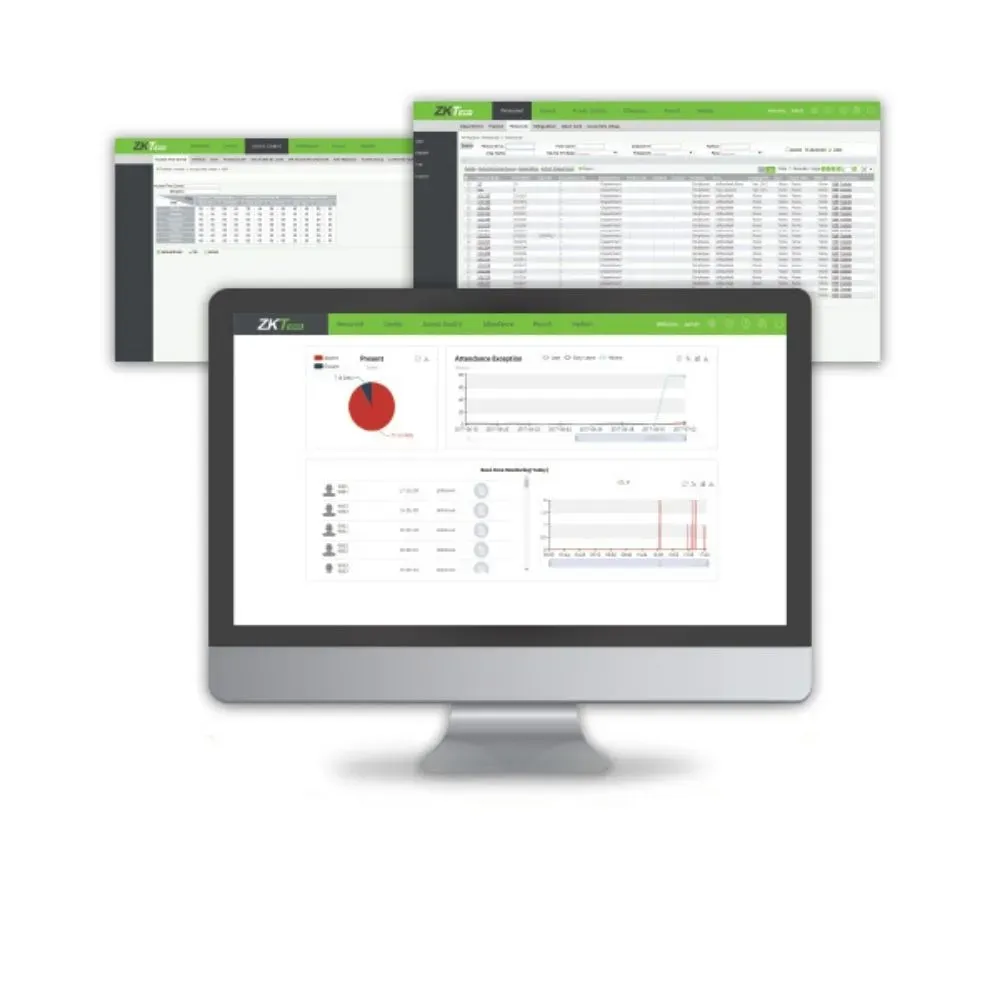
PDKS software ROI shows how automating attendance management can meaningfully impact your bottom line by reducing manual errors, accelerating payroll cycles, improving regulatory reporting, and providing a transparent basis for strategic workforce decisions. By comparing manual tracking vs software options side by side, organizations can quantify differences in data accuracy, time spent on administrative tasks, and the risk of compliance gaps, enabling a scalable path forward. Understanding attendance tracking software cost across licenses, hardware (if needed), implementation, and ongoing maintenance is essential to produce a credible ROI forecast that aligns with budget cycles and procurement processes. Time savings payroll automation can shorten pay cycles, reduce late or incorrect payments, and free HR teams to focus on strategic initiatives like scheduling optimization and analytics-driven labor planning. With a clear ROI framework, leaders can decide whether to roll out PDKS software across locations or start with a focused pilot and smoother adoption.
From a broader lens, attendance management systems sit within the broader category of workforce management platforms and timekeeping solutions that capture hours, leave, and regulatory compliance across sites. This LSI-aligned framing highlights ROI in terms of efficiency, data integrity, and audit readiness rather than a product name. When evaluating alternatives, consider integration with payroll, security, mobile access, and change management to ensure a smooth transition and sustained gains.
PDKS software ROI: Understanding the Value of Automation in Attendance
PDKS software ROI measures how automating attendance tracking translates into tangible and intangible value for the business. By shifting from manual processes to an automated system, organizations can improve data accuracy, reduce payroll errors, and accelerate payroll processing. The focus on ROI helps decision-makers quantify the payback period, expected savings, and long-term benefits beyond the initial expenditure.
Automation also unlocks time savings payroll automation, enabling HR and managers to reallocate efforts from repetitive data entry to strategic tasks such as scheduling optimization and workforce analytics. When evaluating ROI, consider total cost of ownership (TCO), including licenses, hardware, implementation, maintenance, and potential integration with existing payroll or HR systems. Seen through this lens, the PDKS software ROI becomes a blended picture of financial gains and operational resilience.
Manual tracking vs software: Weighing costs, accuracy, and control
Manual tracking often appears cheaper upfront but accrues hidden costs over time, such as human error, disputes over hours, and longer payroll cycles. The comparison between manual tracking vs software illuminates how automation can yield more reliable attendance data, streamlined approvals, and auditable records that simplify regulatory inspections.
By adopting attendance tracking software, organizations typically gain tighter control over timekeeping processes, improved data integrity, and clearer accountability. These improvements translate into reduced rework, fewer discrepancies, and better alignment with labor regulations—benefits that are hard to capture with manual methods alone.
Attendance tracking software cost: Understanding licensing, hardware, and implementation
Understanding attendance tracking software cost requires looking beyond sticker prices to the total investment. Key cost components include software licenses or subscriptions, potential biometric or card readers, implementation and data migration, integration with payroll and HR systems, and ongoing maintenance. A comprehensive view of costs ensures accurate budgeting and a realistic ROI calculation.
Estimating attendance tracking software cost also involves planning for training, change management, and security measures. While hardware may be a one-time purchase, software updates and support are ongoing. Factoring these elements into the cost estimates helps organizations predict cash flow, plan for upgrades, and avoid unexpected expenses that could skew the ROI analysis.
Time savings payroll automation: Accelerating payroll processes and accuracy
Time savings payroll automation is a core benefit of PDKS software. Automated data capture, real-time calculations for overtime and leaves, and seamless data transfer to payroll reduce manual data entry and reconciliation time. This not only speeds up payroll processing but also lowers the risk of errors that lead to rework and disputes.
Beyond speed, automation enhances data reliability and audit readiness. With centralized, timestamped records, organizations can produce accurate reports for regulatory compliance and internal governance without sifting through disparate spreadsheets. This combination of efficiency and trust is a central driver of ROI when comparing automation against manual processes.
ROI framework and practical calculation for PDKS deployment
A practical ROI framework separates costs and benefits over a defined horizon (often 1–3 years). Typical steps include calculating the Total Cost of Ownership (TCO), estimating annual monetary savings from time savings, reduced errors, and overtime control, and then computing ROI as Net Benefits divided by TCO. This structure provides a clear path from investment to measurable value.
To make the analysis actionable, start with baseline metrics—current attendance processing time, payroll processing duration, error rates, and overtime costs. Use conservative savings assumptions and model scenarios with phased rollouts. A controlled pilot can validate savings, refine cost estimates, and strengthen the business case for pursuing broader adoption of PDKS software ROI.
Adoption, risk management, and implementation best practices for PDKS ROI
Successful implementation hinges on thoughtful change management, stakeholder alignment, and risk mitigation. Key practices include involving frontline managers early, planning phased rollouts, and providing practical training that highlights quick wins such as faster payroll processing and fewer disputes. A pilot program helps surface integration challenges and staff adoption issues before full-scale deployment.
In addition to training, address data migration, security, and system integrations to protect attendance and payroll data. Ensuring robust access controls, encryption, and regular security audits supports both compliance and long-term ROI. By balancing technical readiness with workforce engagement, organizations can maximize the benefits of PDKS software ROI while reducing disruption during the transition.
Frequently Asked Questions
What is PDKS software ROI and how is it calculated?
PDKS software ROI measures the value gained from automating attendance tracking and payroll against the total cost of ownership over a defined horizon. To calculate it, estimate annual benefits (time savings from payroll automation, reduced payroll errors, overtime control) and all costs (licenses, hardware, implementation, data migration, integration, training, maintenance). Then ROI = (Net Benefits / TCO) × 100 over 1–3 years.
How does PDKS software ROI compare to manual tracking?
Manual tracking may have lower upfront costs but often incurs hidden expenses from data entry errors, miscalculations, and longer payroll processing. PDKS software ROI tends to be higher in the long run due to time savings and improved compliance, though initial implementation and integration costs must be considered.
What factors influence attendance tracking software cost and ROI for a business using PDKS software ROI?
Key cost drivers include software licenses or subscriptions, hardware needs, implementation and data migration, payroll/HR system integration, training, and ongoing maintenance. ROI is shaped by time savings from automation, payroll accuracy improvements, reduced overtime, and stronger compliance, balanced against these costs over your chosen horizon.
What time savings can payroll automation provide, and how does that affect PDKS software ROI?
Payroll automation reduces manual data entry and corrections, speeding up payroll processing and freeing HR staff for strategic work. These time savings translate into monetary benefits that boost the PDKS software ROI, especially when scaled across multiple locations or large workforce sizes.
How should a company conduct a cost-benefit analysis to assess PDKS software ROI?
Follow a practical framework: define scope and horizon, collect baseline metrics (attendance processing time, payroll cycle time, error rates), estimate conservative savings, compute total cost of ownership, and calculate ROI. Add sensitivity analyses and consider a short pilot to validate savings before full deployment.
What are common ROI risks when implementing PDKS software ROI and how can they be mitigated?
Common risks include data migration challenges, user adoption, integration with payroll/HR systems, and security concerns. Mitigate these with phased rollouts, thorough training, vendor support, strong data governance, secure access controls, and alignment with regulatory requirements.
| Topic | Key Points |
|---|---|
| What is PDKS? |
|
| Manual tracking vs automated PDKS |
|
| ROI & cost analysis scope |
|
| Costs to consider |
|
| Benefits to quantify |
|
| ROI and TCO calculation framework |
|
| Illustrative example snapshot |
|
| Qualitative/Strategic considerations |
|
| Common concerns and how to address them |
|
| Decision-maker guidance |
|
Summary
PDKS software ROI is a descriptive, data-driven view of how attendance automation translates into cost savings and efficiency gains. By comparing total cost of ownership with tangible benefits like time savings from payroll automation, reduced errors, and better compliance, organizations can estimate payback periods and long term value. To maximize this ROI, define scope and horizon, collect baseline metrics, run a controlled pilot, and plan for change management, training, and integration with existing systems. In short, automating attendance tracking can transform payroll processes from a manual burden into a strategic asset for organizations that scale and comply with regulations.