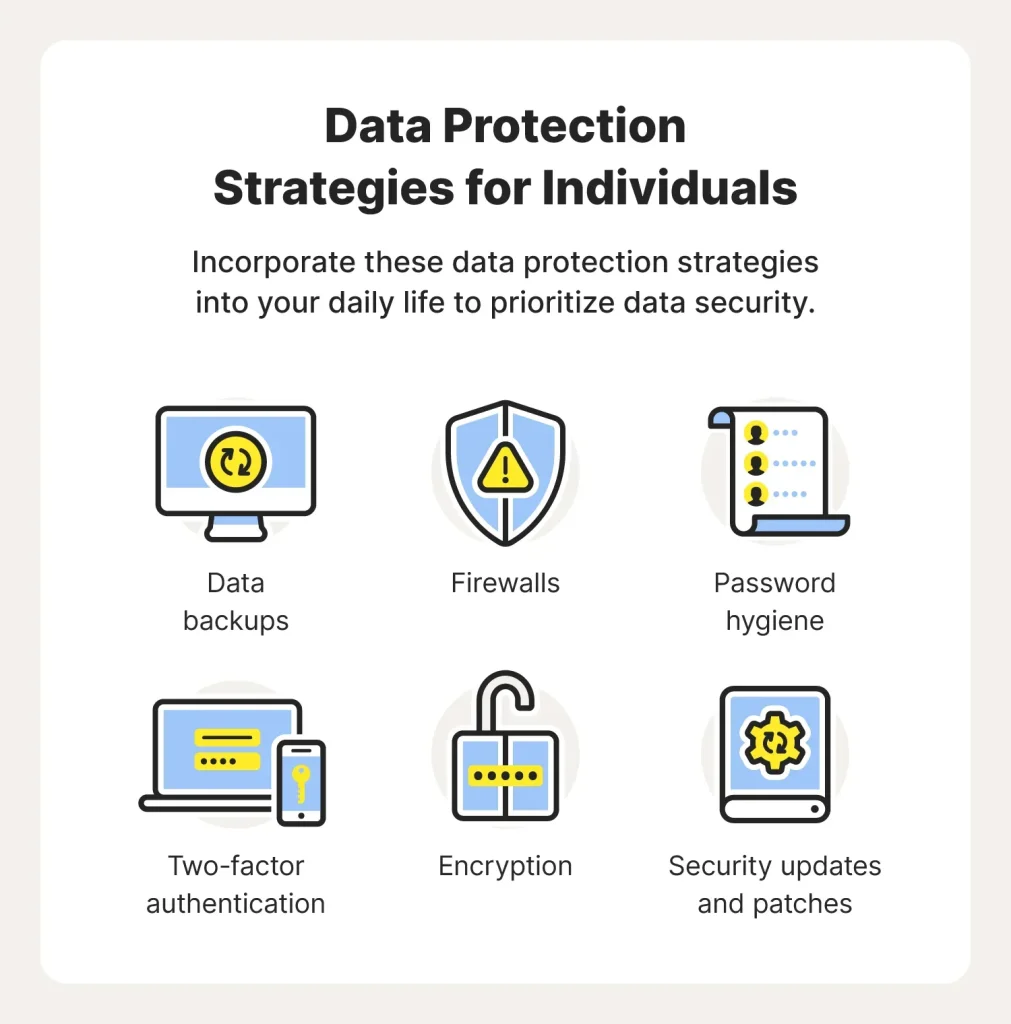
PDKS Security and Data Protection form the backbone of safeguarding employee information within the Personnel Devam Takip Sistemi, which tracks attendance, shifts, leave, and payroll data. To protect this sensitive information, PDKS security practices ensure that only authorized users can view payroll and attendance records. PDKS data protection guidelines help prevent breaches that could trigger regulatory penalties and reputational harm. A strong approach to PDKS authorization controls who can access which modules and actions, while PDKS encryption protects data at rest and in transit. Together with robust access control in PDKS, these measures reduce risk, support compliance, and maintain trust across the workforce.
Viewed through an alternative lens, protecting a PDKS environment is less about a single feature and more about a coherent approach to privacy, risk, and governance. In LSI terms, organizations use related concepts such as identity verification, role-based access, automated provisioning, and context-aware controls to describe who is allowed to see which data and when. Rather than relying on encryption alone, the blueprint for security embraces privacy by design, data minimization, retention policies, and secure deletion across systems and backups. Effective key management, access auditing, and incident response capabilities further support resilience, ensuring that even a breach is contained with minimal impact. Ultimately, regulatory alignment, vendor risk considerations, and ongoing education help translate these principles into practical, auditable processes that protect attendance, payroll, and personal data across the organization. By framing security as a shared responsibility across people, process, and technology, organizations can sustain improvements over time. This holistic view aligns with best practices in data protection, risk management, and privacy regulations, helping teams measure progress with auditable metrics. Remember that the goal is not just technology but a culture that values confidentiality and integrity as competitive differentiators in a data-driven world. Continual testing, auditing, and vendor assessments keep defenses aligned with evolving threats and regulations.
Understanding PDKS Security and Data Protection: Core Concepts and Threat Landscape
PDKS (Personnel Devam Takip Sistemi) systems handle attendance, shifts, leave, payroll, and other sensitive employee data. The security and data protection of these systems are not optional but foundational, because the data processed include identifiers, timestamps, locations, and potentially health or leave information. By focusing on PDKS security and data protection, organizations guard confidentiality, integrity, and availability, reducing regulatory risk and reputational harm.
A strong security posture begins with understanding the threat landscape: attackers may target authentication, data flows, or data at rest. Protecting PDKS data means combining robust authorization, encryption, access control, and governance to prevent misuse, fraud, or disruption of payroll and HR processes. In short, a proactive approach to PDKS security and data protection enables reliable operations while meeting legal and policy requirements.
PDKS Authorization: Implementing Least Privilege with RBAC and ABAC
Authorization in a PDKS context ensures that users access only what they need. By applying least privilege principles, organizations limit exposure if credentials are compromised, and reduce the risk of insider misuse of sensitive payroll and attendance data. PDKS authorization should be grounded in clear role definitions and context-aware decision-making.
Role-based access control (RBAC) and attribute-based access control (ABAC) offer complementary strengths for PDKS. RBAC provides stable, scalable permissions by role, while ABAC adds dynamic decisions using user attributes and resource sensitivity. Integrating MFA, just-in-time access, and regular access reviews further strengthens authorization and helps maintain alignment with evolving roles and compliance needs.
Encryption Strategies in PDKS: Protecting Data at Rest and in Transit
Encryption is central to PDKS data protection, guarding information both when stored and when it travels across networks. Implementing encryption at rest with strong algorithms like AES-256 helps secure databases, backups, and log files against unauthorized access.
For data in transit, TLS (1.2 or newer) should be used to protect client-server and inter-service communications. Key management is critical: keys must be stored securely, rotated regularly, and separated from encrypted data. Envelope encryption and field-level encryption provide scalable, layered protection for sensitive attributes such as personnel numbers or health indicators.
Access Control in PDKS: Strengthening Defenses with MFA, Just-in-Time, and Reviews
Access control in PDKS goes beyond passwords. Implementing multifactor authentication (MFA) significantly reduces the risk of credential abuse, while adaptive authentication and risk-based controls help balance usability with security. Just-in-time access enables temporary elevations for specific tasks, with automatic revocation to minimize exposure.
Regular access reviews are essential to maintain accurate permission sets as roles evolve. Enforcing separation of duties, monitoring for orphaned access rights, and aligning control practices with regulatory obligations improves defense in depth. A well-managed access control strategy underpins PDKS security and data protection while supporting operational efficiency.
PDKS Security and Data Protection: Data Minimization, Retention, and Privacy by Design in PDKS
Data minimization and retention policies are foundational elements of PDKS data protection. Collecting only what is necessary for payroll, attendance, and compliance reduces exposure, while well-defined retention periods enable timely secure deletion and disposal.
Privacy by design and regulatory alignment (such as KVKK and similar frameworks) should be embedded in PDKS architecture. Pseudonymization and anonymization, combined with transparent consent and breach response procedures, help minimize data exposure. Proper governance and data handling practices support trust and regulatory compliance across the organization.
Auditing, Monitoring, and Incident Response for Robust PDKS Security
Effective auditing and continuous monitoring are essential for detecting anomalies and ensuring accountability in PDKS deployments. Detailed logging of authentication events, data access, and configuration changes, alongside SIEM-based correlation, enables rapid detection of suspicious activity.
An incident response plan for PDKS should define roles, communication protocols, containment steps, and recovery actions. Regular testing through tabletop exercises and vulnerability assessments keeps defenses current. A mature approach to auditing, monitoring, and incident response reinforces PDKS security and data protection, supporting resilient, compliant operations.
Frequently Asked Questions
What is PDKS Security and Data Protection and why is it important for organizations?
PDKS Security and Data Protection is a framework of controls designed to protect employee data handled by PDKS software. It centers on strong authorization, encryption, MFA, auditing, and privacy by design to safeguard confidentiality, integrity, and availability. Implementing these practices reduces the risk of data breaches, regulatory penalties, and reputational harm while keeping payroll and attendance operations reliable.
How does PDKS authorization help limit access to payroll and attendance data?
PDKS authorization controls who can access payroll and attendance data by role and context. Use least privilege, RBAC and ABAC, MFA, just-in-time access, and periodic access reviews to ensure sensitive modules are accessible only to approved personnel and to support regulatory compliance.
What encryption strategies should PDKS use to protect data at rest and in transit?
PDKS encryption should cover data at rest with AES-256 and data in transit with TLS 1.2 or higher. Complement with strong key management, envelope encryption for large datasets, and field level encryption for sensitive attributes to protect data throughout its lifecycle.
What is the role of access control in PDKS and how can it be implemented?
Access control in PDKS is about enforcing least privilege and dynamic access decisions using RBAC and ABAC, reinforced by MFA and just-in-time approvals. Regular access reviews and centralized logging help detect and prevent unauthorized access while supporting audits.
Beyond encryption, how does PDKS data protection address governance and privacy?
Beyond encryption, PDKS data protection includes data minimization, retention policies, pseudonymization, anonymization, privacy by design, and regulatory alignment with laws such as KVKK. These governance practices reduce exposure and ensure responsible handling of personal data.
What practical steps can organizations take to harden PDKS security and data protection?
Practical steps to harden PDKS security include mapping data flows, defining roles and access matrices, enforcing MFA, implementing encryption at rest and in transit with proper key management, secure development practices, data minimization and retention rules, comprehensive logging and SIEM, regulatory alignment, incident response planning, and regular testing.
| Topic | Key points |
|---|---|
| Purpose of PDKS security |
|
| Core elements |
|
| Authorization in PDKS |
|
| Encryption in PDKS |
|
| Data protection beyond encryption |
|
| Auditing and incident response |
|
| Practical implementation steps |
|
| Common challenges |
|
| Real-world orientation |
|
Summary
Conclusion follows table.